How to Redesign a Small Bathroom in a Victorian Terraced House
Author: Laura Fellows
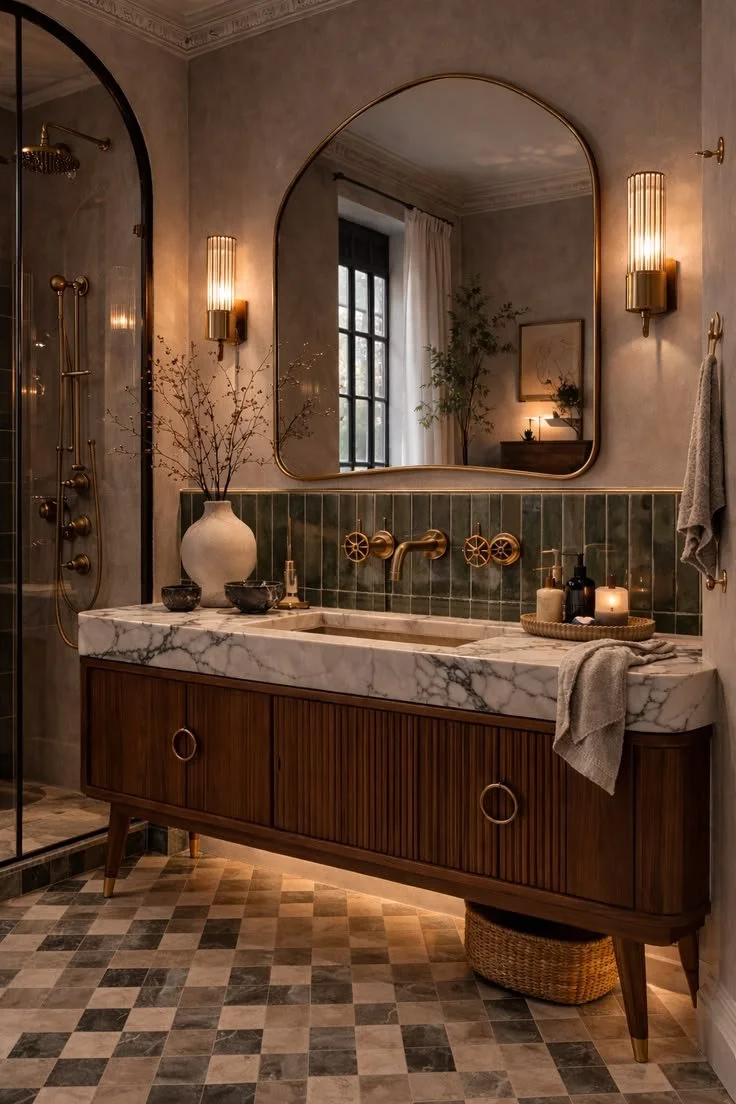
The Room That Gets Overlooked
The bathroom is often the last room people think about when they're planning a renovation, and the first one they wish they'd thought about more carefully once it's done. In a Victorian terraced house in Wimbledon, the bathrooms are almost always small, often awkwardly shaped, and frequently the room that dates a house most obviously.
At Baker & Fellows we've redesigned a lot of small bathrooms in period homes across South London, and the good news is that a well thought through small bathroom can feel genuinely luxurious. The bad news is that getting there requires more careful design thinking than most people realise. If you're considering a bathroom project as part of a wider renovation, you can find out more about how we work with Wimbledon homeowners here.
Image: Pintrest
Why Small Bathrooms Are Actually a Design Opportunity
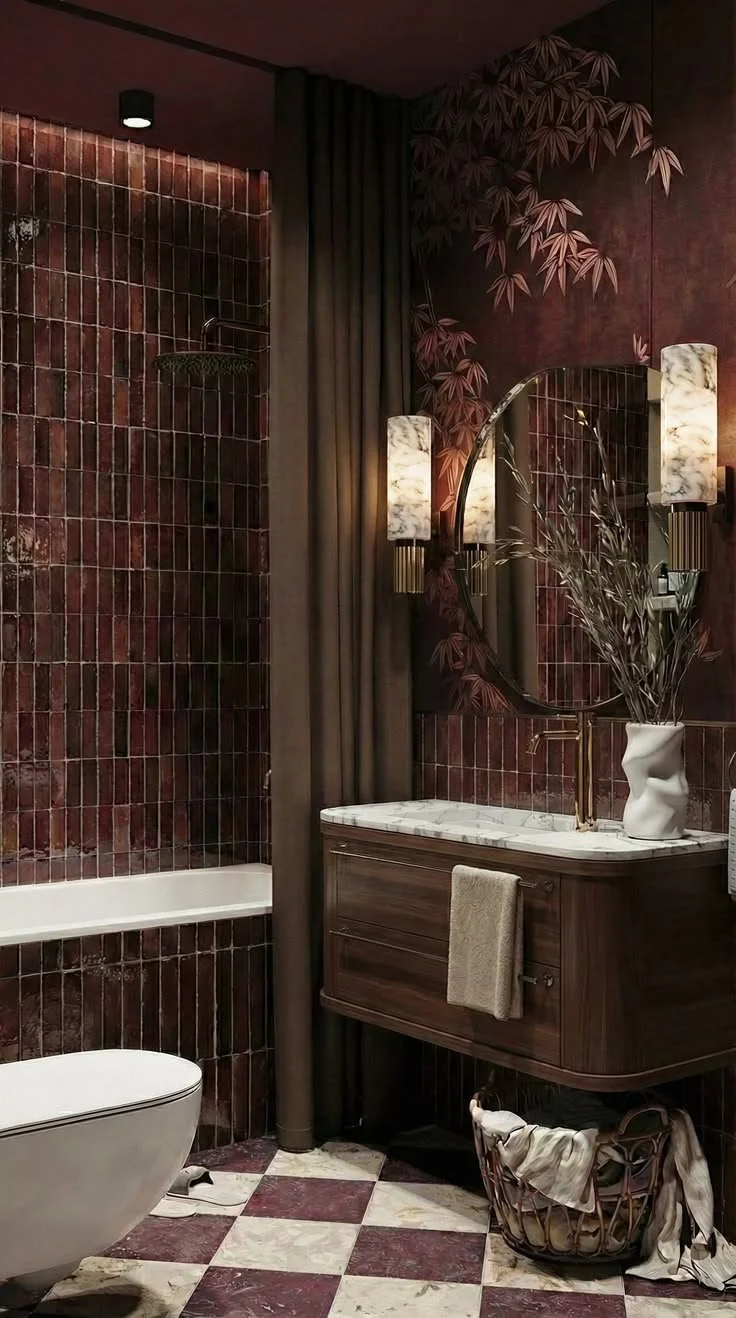
There's a tendency to see a small bathroom as a problem to be solved. We see it differently. A small room means every single decision matters, which forces a level of design rigour that larger rooms don't demand. When you get it right, a compact bathroom can feel more refined than a large one that hasn't been properly thought through.
The key is to stop trying to fit everything in and start thinking about what actually needs to be there. Most small Victorian bathrooms are cluttered not because they're too small but because they've been filled with the wrong things in the wrong places.
Image: Pintrest
Getting the Layout Right
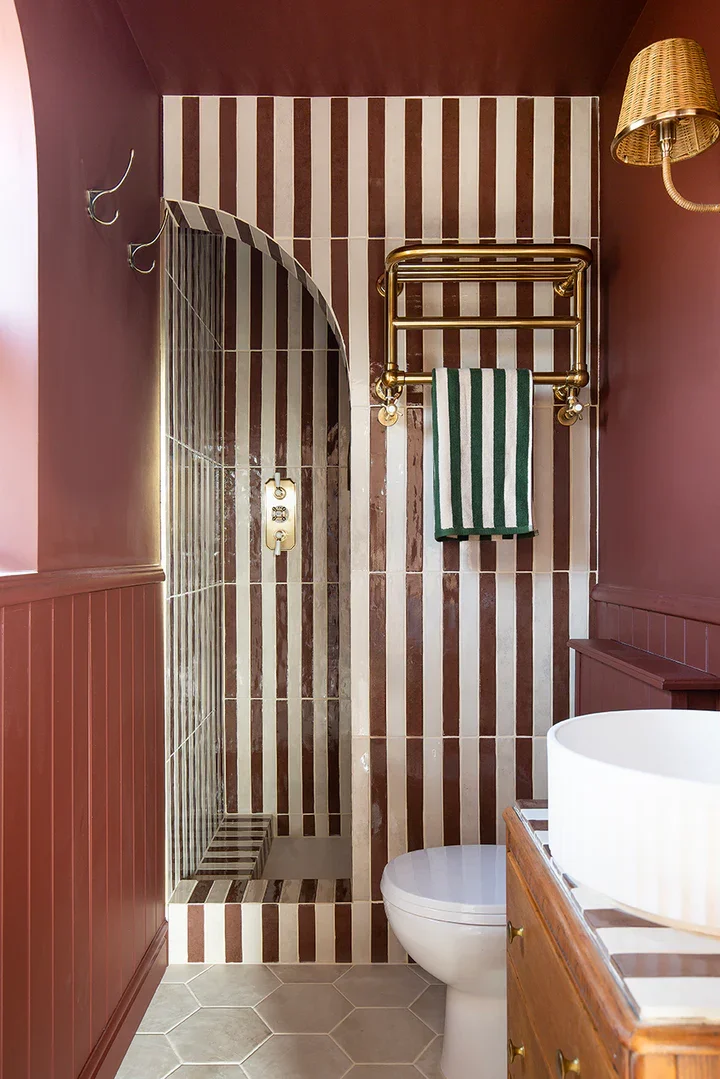
In a small bathroom the layout is everything. The position of the bath or shower, the basin, and the toilet relative to each other determines how the room feels to use and how spacious it reads. Moving a single element, rotating the bath, recessing the basin into a niche, repositioning the toilet - can transform a bathroom that feels cramped into one that feels considered.
We always start with the layout before anything else. Materials and finishes are relatively easy to change. A layout that doesn't work is expensive to fix.
Image: Quorn Stone
Materials and Finishes in a Small Space
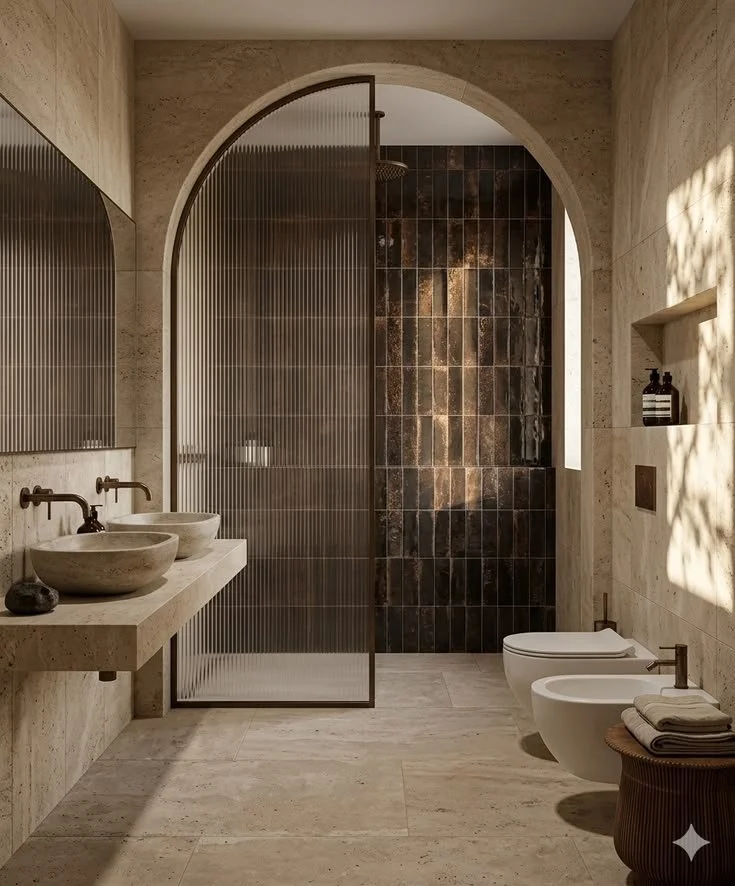
In a small bathroom, material choices have an outsized impact. Large format tiles with minimal grout lines make a floor read as a single surface and feel larger than it is. A wall hung basin with no pedestal keeps the floor clear and opens up the space visually. A frameless shower screen rather than a curtain or a framed enclosure removes visual clutter without removing the function.
Colour is often used too cautiously in small bathrooms. A dark, richly coloured bathroom can feel intimate and beautiful rather than oppressive if the materials are right and the lighting is well considered. Some of our most successful small bathroom projects have used deep greens, charcoal, or warm stone tones rather than the default white.
Image: Pintrest
Lighting Makes or Breaks a Bathroom
This is the thing that most people get wrong. A single ceiling downlight in a small bathroom produces flat, unflattering light that makes the room feel clinical and mean. Good bathroom design doesn’t reply on the spot lights / ceiling light, they layer different low level lighting as well - wall lights either side of the mirror at face height, lighting in niches, mirror lighting, ideally some ambient light that isn't directly overhead.
In a Victorian terrace where ceiling heights are generous, there's usually real opportunity to do something interesting with lighting that transforms how the room feels morning and evening.
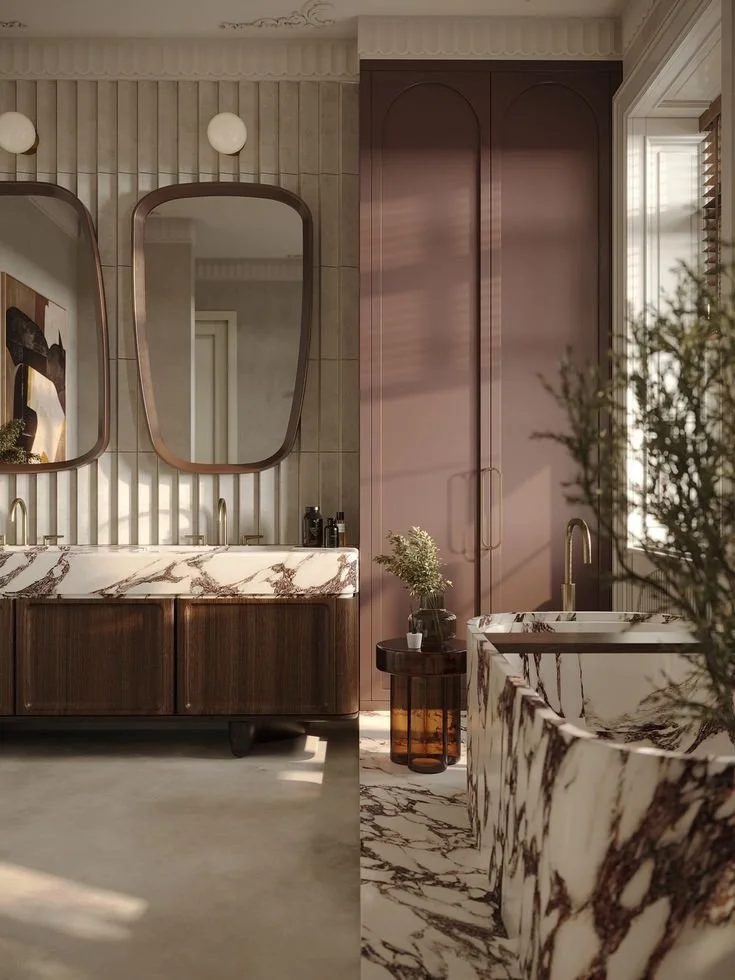
Storage Without Clutter
A small bathroom that has nowhere to put anything will always feel chaotic. But bulky storage units make a small room feel smaller. The answer is integrated storage that doesn't read as storage - recessed niches in the shower wall, a mirrored cabinet that sits flush with the wall surface, a vanity unit with deep drawers rather than open shelving.
The goal is a bathroom where everything has a home and the surfaces stay clear. That's what makes a small bathroom feel calm and considered rather than cramped.
Image: Naya
Getting Started With Baker & Fellows
If you're thinking about redesigning a bathroom in your Wimbledon home, whether as a standalone project or as part of a wider renovation, we'd love to talk through what's possible.
Get in touch at hello@bakerfellows.com and we can arrange an initial consultation at your home.
Frequently Asked Questions
How do you make a small bathroom in a Victorian house feel bigger?
The most effective things are getting the layout right, using large format tiles with minimal grout lines, choosing a wall hung basin to keep the floor clear, fitting a frameless shower screen, and layering the lighting properly. We always start with the layout before touching materials or finishes, because a well-planned small bathroom will always outperform a poorly planned large one.
How much does it cost to redesign a bathroom in South London / South West London?
A well-designed and properly finished bathroom redesign in South London or South West London typically starts at around £8,000 to £15,000 for a straightforward small bathroom, rising to £20,000 and above for a larger family bathroom or a higher specification project.
Do I need planning permission to redesign a bathroom in Wimbledon?
In most cases no. Internal bathroom works don't require planning permission. However if your project involves structural changes or alterations to an external wall in a conservation area, it's worth checking your property's planning status before work begins.
What is the best tile for a small bathroom in a period property?
Large format stone or stone effect tiles in a warm neutral tone tend to work best in period properties. Smaller mosaic or metro tiles can work well as accents but used throughout a small bathroom they can make the space read as smaller than it is.
Baker & Fellows is a residential interior design and architecture studio based in South London, working across Kennington, Wimbledon and surrounding areas.